
 Admin
 19 Oct 2026
Go into any warehouse, factory, or car park and you will notice something. Certain floors appear worn-out after a few years with cracks or patching peels and dusty surfaces. Still others appear to be solid even after 10 years of heavy traffic. Why is the difference ?
The majority of us evaluate a floor based on what we see. But the actual story starts at the concrete underneath. Even the greatest coating will not be able to hold on the substrate in case it is weak, wet, oily, or even uncleaned.
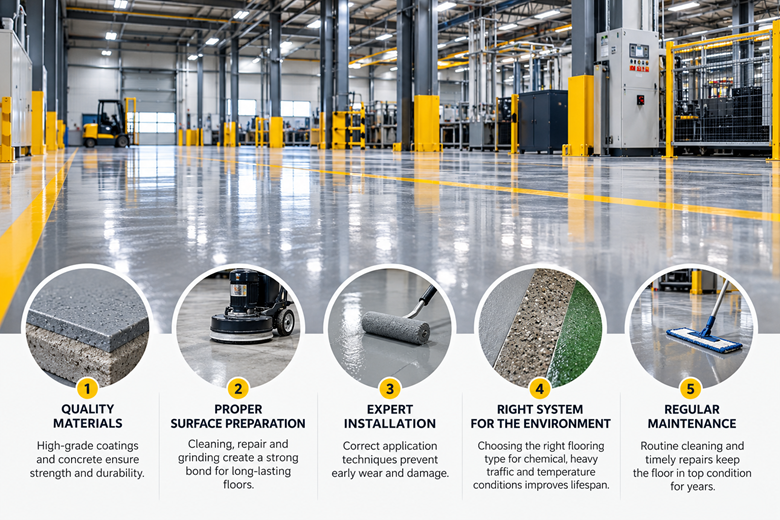
Moisture is a common troublemaker, especially in our climate. When the humidity and vapour increases through a slab, the coating may be displaced off the surface by the action of the increasing vapour pressure. This is the reason why surface preparation is never done in a hurry. The process of grinding, cleaning, crack repair, and even determining the amount of moisture in the floor can be painfully slow, but they decide how long your floor survives.
If we were to choose just one cause of early failure of floors, we would mention skipped preparation. A coating is only as strong as the surface it is bonded to.
Not every floor faces the same battle. A food processing facility is subjected to spills, washdowns, and temperature variations. A warehouse is concerned with forklifts and pallets. A car park deals with friction of tyres, oil drips, and heat. A hospital should have a hygienic surface that can be easily cleaned.
When a floor is selected because it is looking good or cheap rather than because it is practical, trouble is the consequence. The better question is: What will this floor go through everyday? That is why we always encourage you to think about three things before choosing a system:
1. Nature of traffic, be it foot, trolleys, or heavy vehicles.
2. Exposure to chemicals, oils or water.
3. Temperature fluctuations and sunlight.
The correct system is a lot simpler to choose after you answered these. Epoxy can be both effective in a lot of environments, whereas durable polyurethane flooring can be the more suitable choice if you need flexibility, chemical resistance and also be able to accommodate a thermal shock. Neither one is better in every case. The right choice depends on your space.
Even a great product can go to waste when poorly implemented. Ratios of mixing, curing, temperature and humidity on the day of installation all play important roles. An excessively thin coating will not have a long life. One that is improperly mixed, can never cure properly.
This is where experience comes into play. When to stop, when to make changes and when conditions are not just right are also known to applicators who are knowledgeable in the material. It has always been our belief that a product and people using it are both equal partners in an outcome. That is why we offer advice, training and site support along with our materials, not just a delivery and a handshake.
Lots of floor collapses begin in the edges. The movement and moisture are initially revealed at expansion joints, wall intersections, drains, and cracks. When all these facts are overlooked, a minor crack can become a great repair.
Good sealing and proper joint treatment protect the floor from the inside out. This is the reason why we have our line of construction sealants and bonding solutions. The reason why a flooring system is good is because all the components of the building cooperate with the flooring system, including the slab, the sealant, the waterproofing below.
This is one thing that most property owners forget. Even the hardest floor needs to be given a bit of attention. Spills left sitting, rough cleaners applied in the wrong way, or heavy machinery dragged over the top can all end up reducing its life.
A simple routine goes a long way:
1. Do rapid clean-ups, particularly chemicals and oils.
2. Apply cleaning products that suit to your floor.
3. Check joints, and edges frequently.
4. Do early repairs of minor damage before it spreads.
Consider it as a service to a vehicle. A little attention now saves a big bill later.
Not every type of flooring are made the same way. The materials, the experimentation and the benchmarks of a product are reflected in the way that the product will act in years to come. Our products at Organix are designed and manufactured to meet the high international standards and it has been used in thousands of projects in the region which includes airports, metro stations, shopping malls, hospitals and industrial sites. We also care about how our products affect people and the planet.
We lean towards a safer, environmentally responsible formulations.
The floors which endure the most do so because in most cases there was someone who planned for the long run. They thought about the slab, the dampness, the traffic, the details, and the maintenance prior to a drop of coating being poured.
It can be tempting to start with the lowest price. However, a floor that requires fixing every 2 years ends up costing far more than the a floor that was done in a proper way initially. Downtime, lost productivity, and repeated repairs add up quickly in a busy facility.
What Makes Some Industrial Floors Last Longer Than Others?
Admin
19 Oct 2026
Fire Protection Methods For Commercial Buildings: What Every Owner Should Know
Admin
18 Oct 2026
Liquid Applied Waterproofing Vs Membrane Waterproofing and Which Is Better?
Admin
23 Sep 2026
How Does Roof Coating Compare To Waterproofing?
Admin
20 Sep 2026
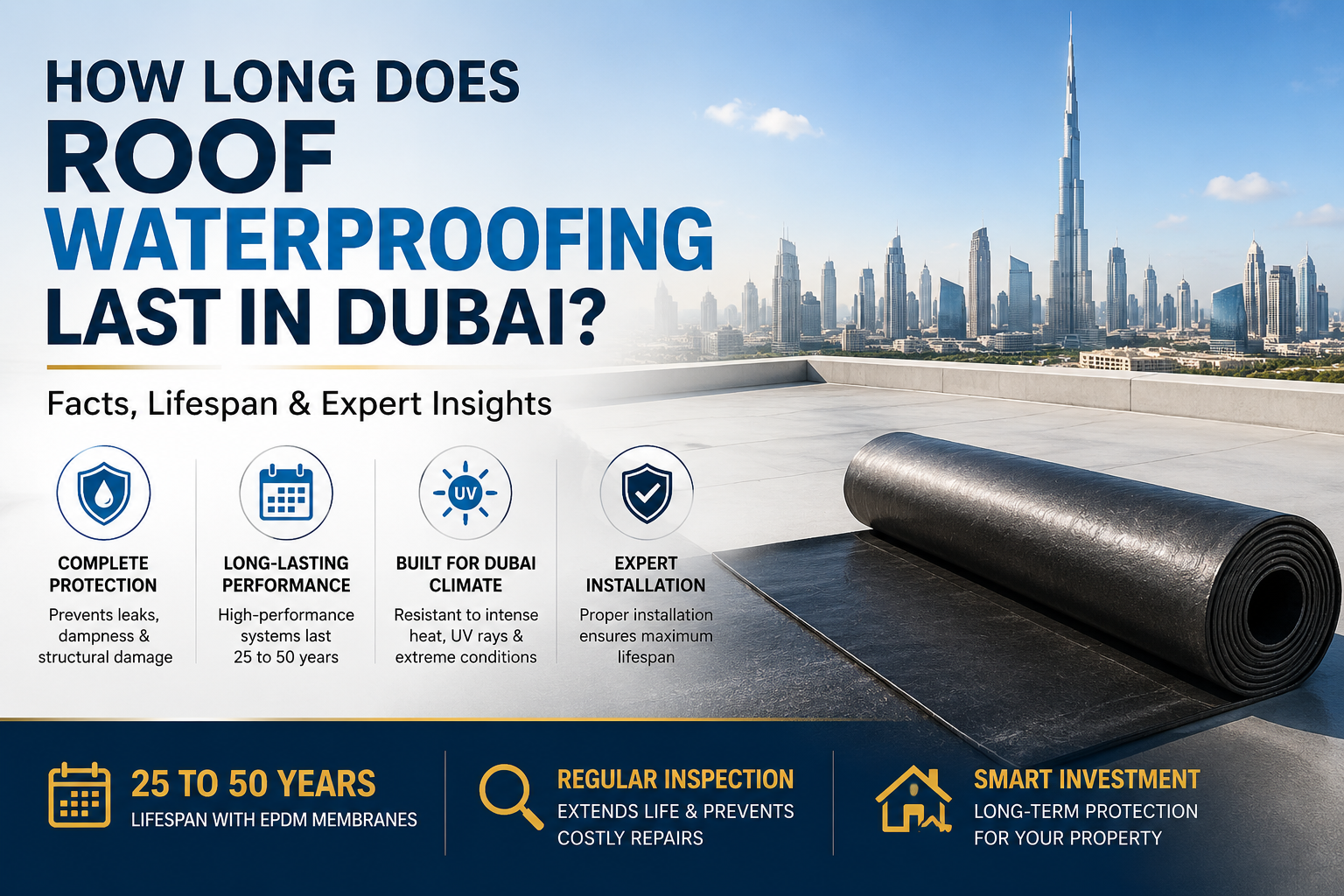
HOW LONG DOES ROOF WATERPROOFING LAST IN DUBAI?
Admin
25 Aug 2026
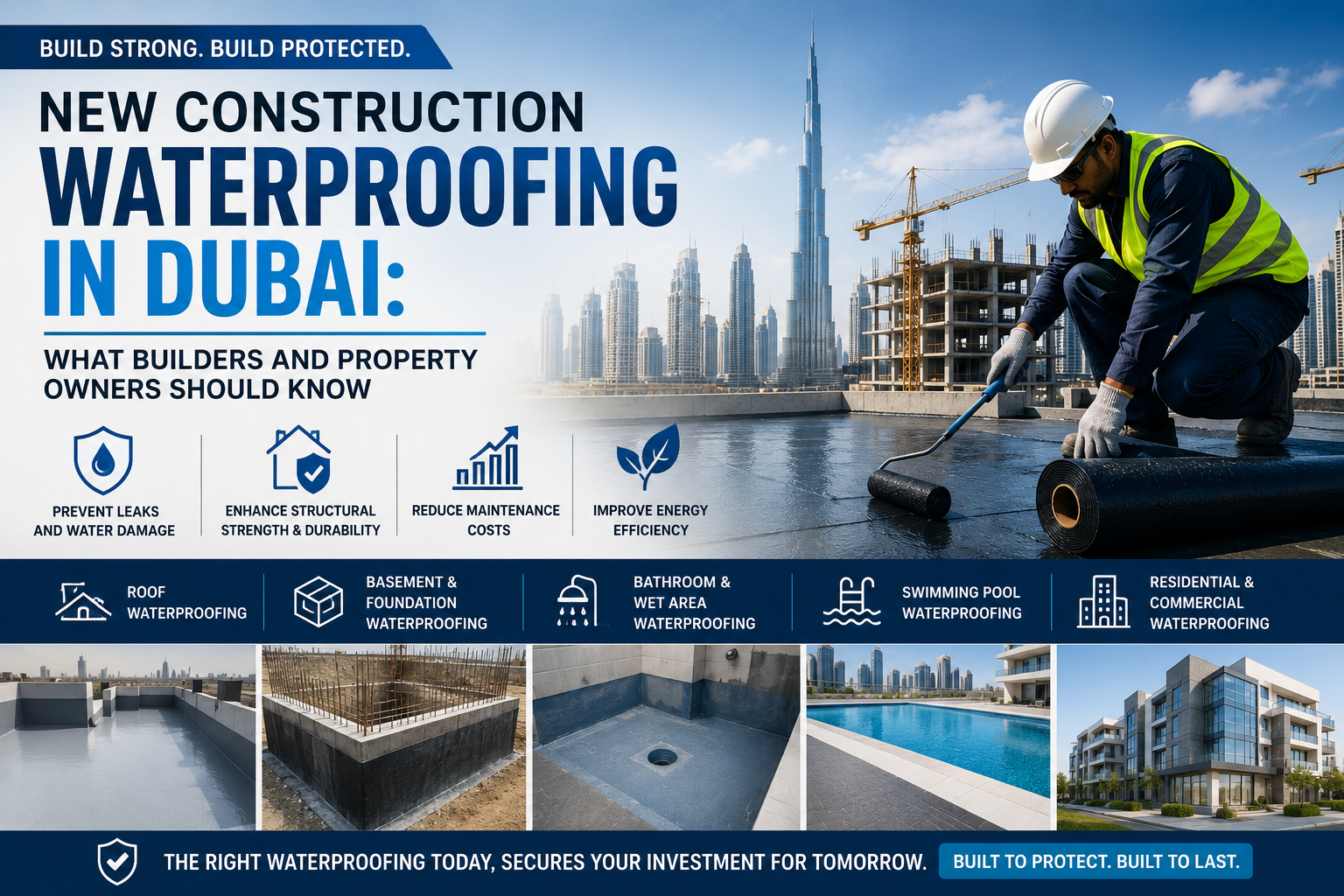
NEW CONSTRUCTION WATERPROOFING IN DUBAI: WHAT BUILDERS AND PROPERTY OWNERS SHOULD KNOW
Admin
24 Aug 2026